

Ghent: Amazing Medieval City of Guilds and Commerce
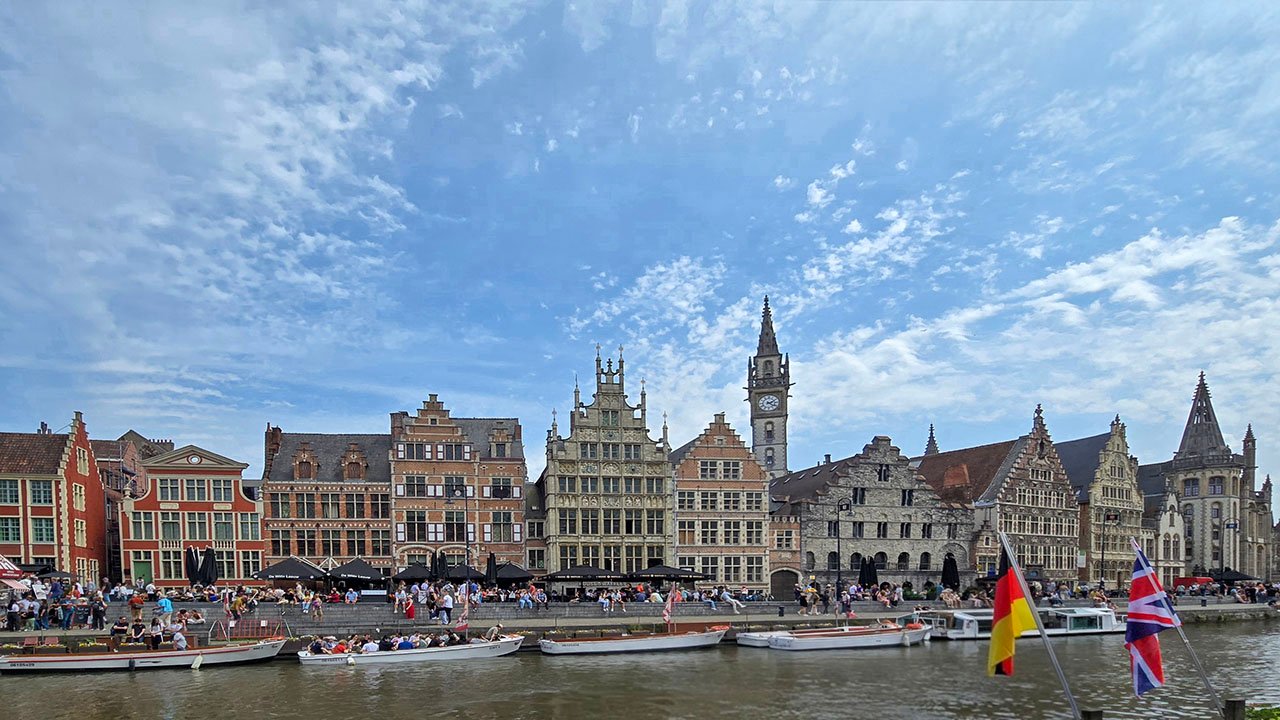
GHENT: City of Castles and Guilds and
Medieval Architecture
Ghent, just a short trip on the train from Bruges, is the second largest city in Belgium and the capital of Flanders. The official language here is Dutch. Wondering why I mentioned this? Well Belgium is divided into three federal regions: the Flemish Region which speak Dutch (Flanders), the Walloon Region which speaks French, and Brussels which is the Capital and naturally is bi-lingual.
A little bit of history tucked in here and there just for interest.
Ghent is believed to have been founded in 630 AD. Located on the Rivers Scheldt and Lys became a powerhouse in wool and cloth production. One of Ghent’s main industries in the 14th century was in the Belfry or Cloth Hall and it was wool and cloth.
How To Get There
Ghent-Terneuzen
Canal …
Ghent geographically is located at the confluence of two main rivers. As trade was done a lot by water Ghent a very busy city. Their exports made them a major industrial centre in Northern Europe.
Currently, in part due to the Ghent-Terneuzen Canal, which is 200m wide, 13.5 meters deep and 32 km long, it services large ocean going vessels. It is estimated that 11,000 ships use the Canal a year with 30 per day.
Today, Ghent is a vibrant city which hosts a University, an abundance of medieval buildings that bring to life a sense of what the city looked like during earlies times. As with so many European cities the architecture alone is worth the trip and the food is a close second.
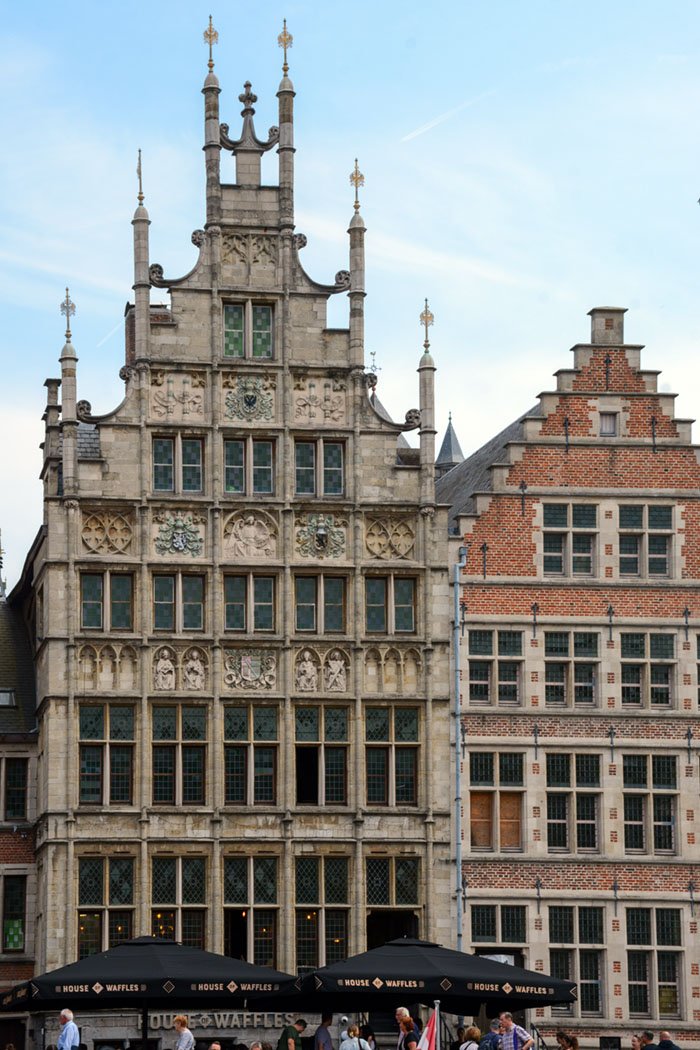
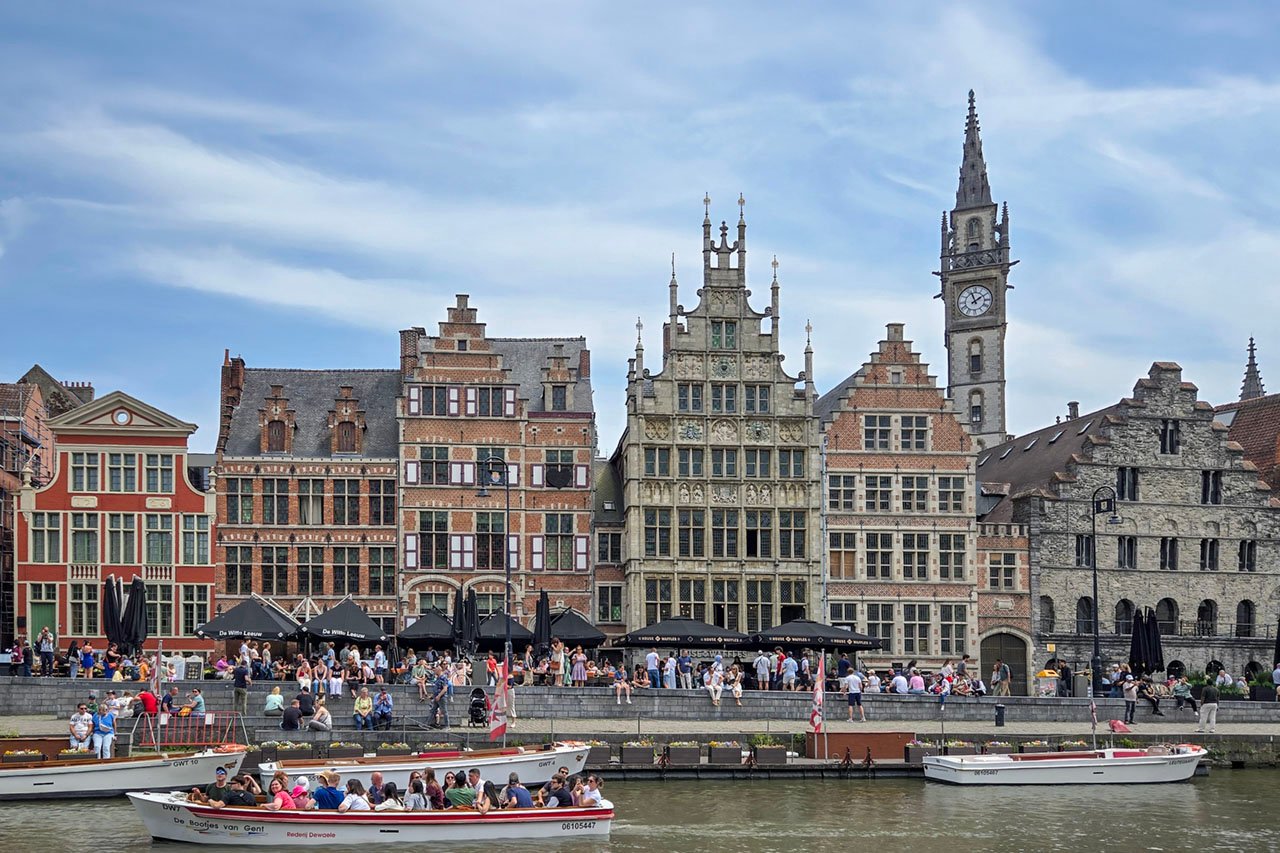
House of the Angel and First Corn Meters’ House in the historic center of Ghent along the River Leie on the Graslei (Grass Quay) of Historic Ghent. Ghent was a major European city between the 13th and early 16th centuries, known for its well-preserved medieval architecture.
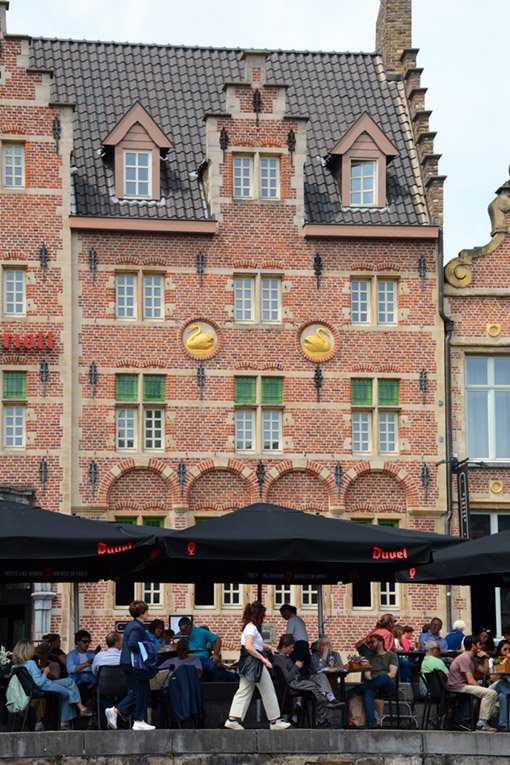
This building with 2 Swans on the facade was once a Brothel and later a Brewery. It is now home to the Marriott Hotel.
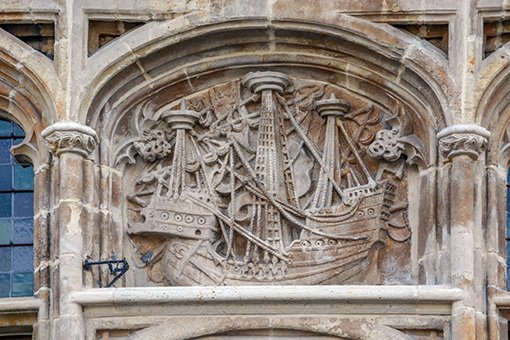
This is a stone relief carving of a medieval sailing ship on the facade of the Ghent Free Boatmen’s Guild House!
Churches of Ghent
St Bavo’s and St. Nicholas.
A couple of the sites you might enjoy is St. Nicholas’ Church and St. Bako’s Cathedral.
St Bavo’s is more than a 1000 years old and it has a rich history. Saint John the Baptist consecrated this site in 942. In the middle ages it was converted to a Gothic style (bigger and more lavish).
In 1536 Emperor Charles V ordered it demolished . Part of it was demolished however not all. The balance of the church was converted into military barracks.
In 1559, it was established as Saint Bavo’s Cathedral.
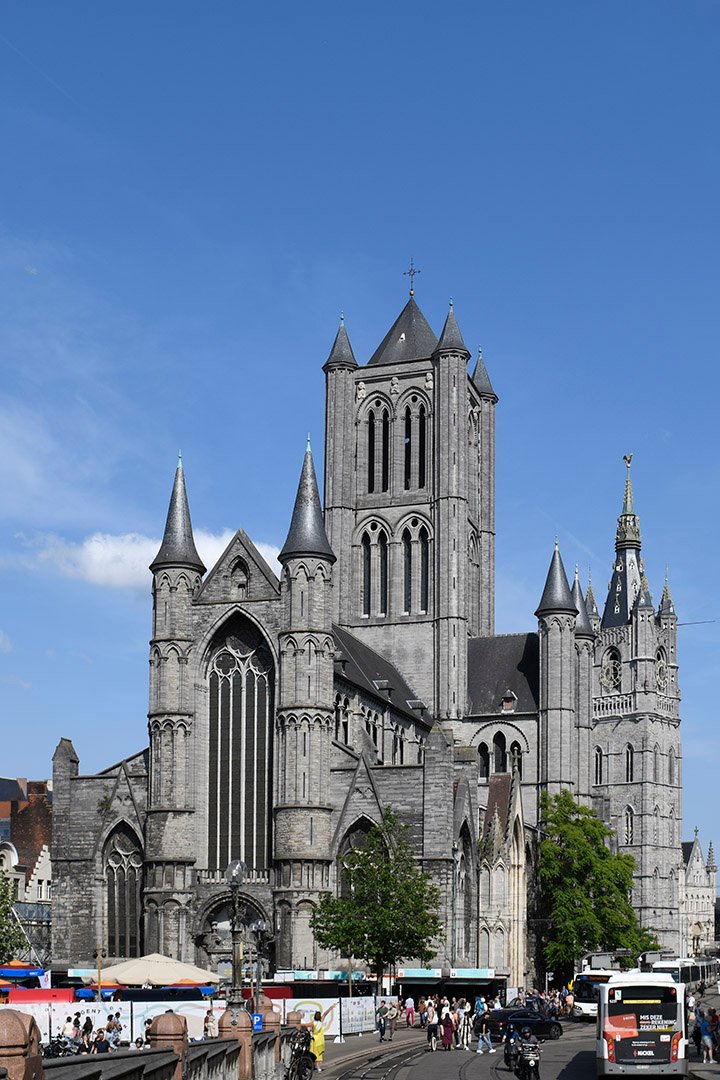
St. Nicholas’ Church which was built in Tournai bluestone or Petit Granit . It is a dense limestone and known for if dark blue-gray color.
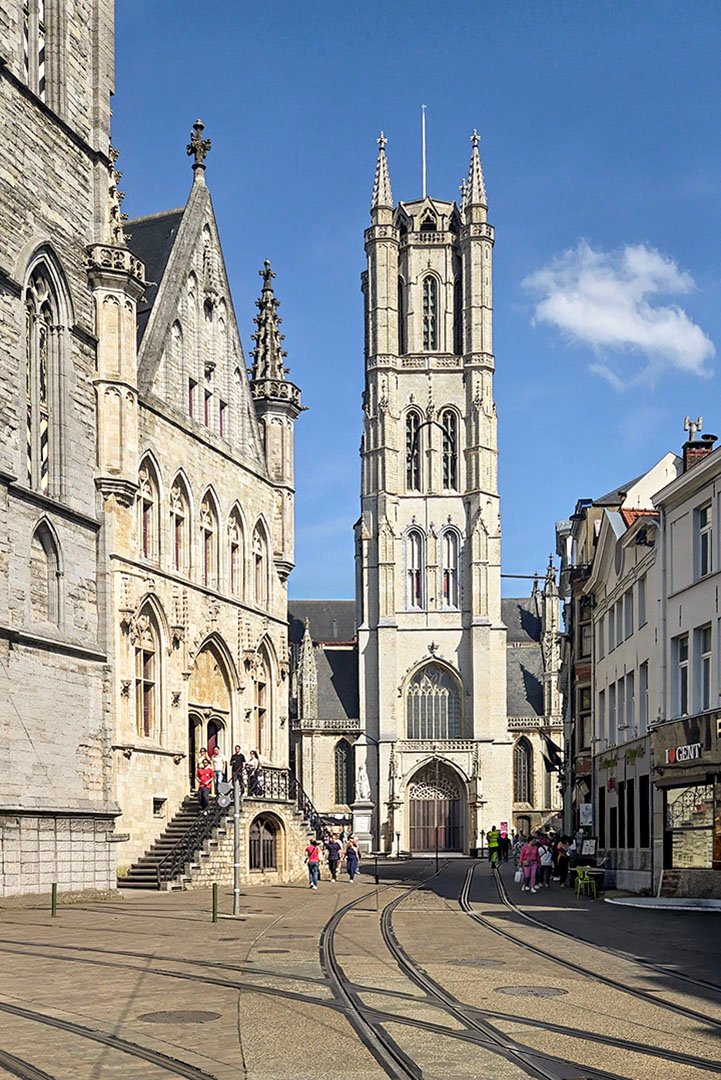
Saint John’s Church was converted to the Gothic style during the 15th and 16th centuries, and gradually took on its current form as Saint Bavo’s Cathedral.
Another church worthy of a visit St. Nicholas’ Church which was built in Tournai bluestone or Petit Granit . It is a dense limestone and known for if dark blue-gray color. As with many of the churches we have visited in Europe the artistic details are amazing including the stain glass windows.
Canal Rides on the Rivers of Ghent
Lys (Leie) and Scheldt (Shelde)
Since transportation here was mostly via boats, we went for a boat ride. You certainly get a different perspective from the canal, looking at the buildings.
An example are the houses along the canal, which I noticed had large doors at the water level that looked like garage doors.
They are not boat sheds; rather, they were used as access spots for boats to unload and load goods and people. Additionally, these doors opened for flood control and as they were always cool they acted as a root cellar for food.
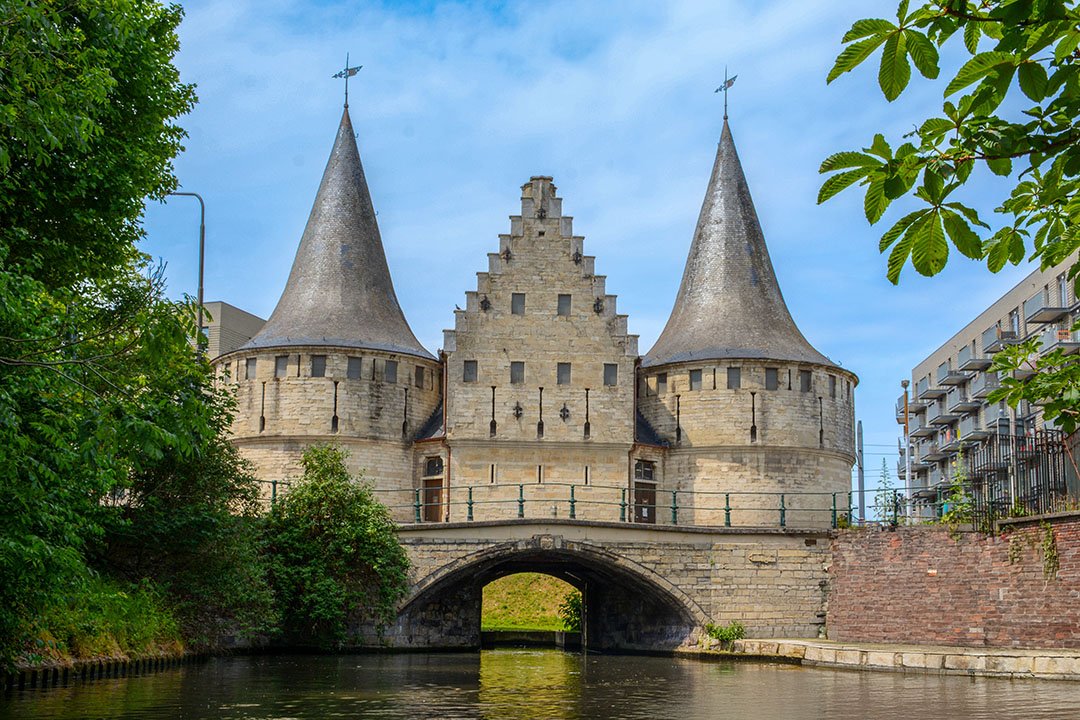
The Rabot is one of Ghent’s most distinctive medieval landmarks, built in 1489. It is a fortified lock at the intersection of the Lieve canal with the city canal. The towers were added after a 40-day siege in 1488 to strengthen the city’s defenses.
Our guide on the boat pointed out the Dovecots at the peak of people’s roofs. They were signs that these people were rich and powerful. The right to own a Dovecot was limited to only the feudal lords and the aristocracy. They kept doves and pigeons for food.
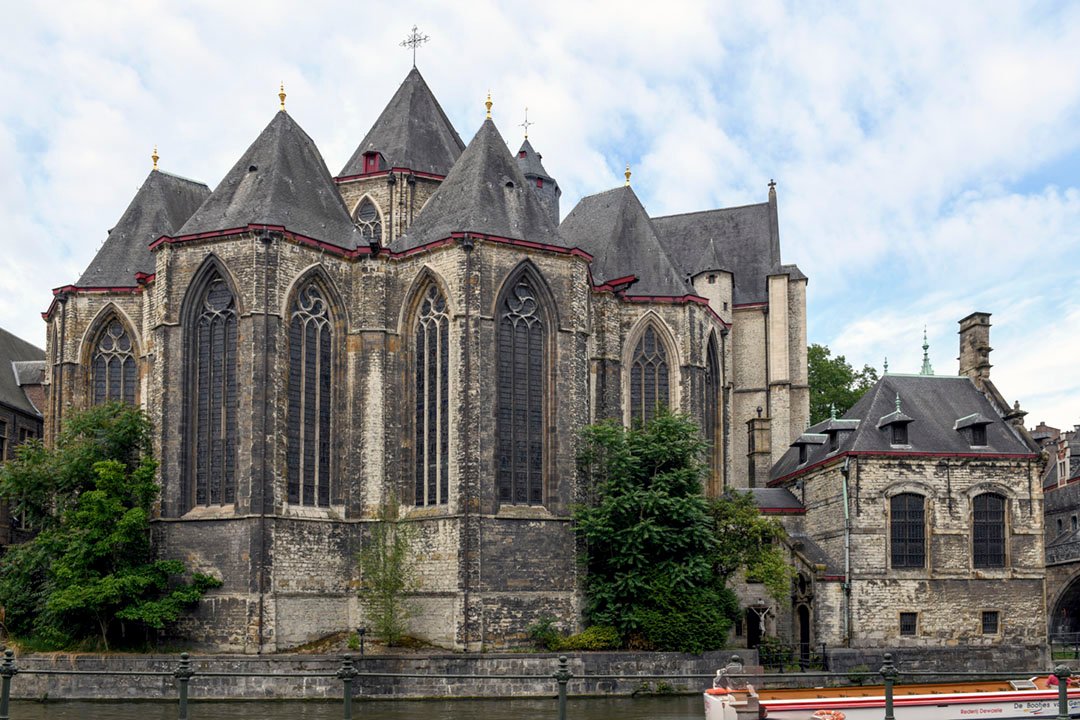
Saint Michaels Church is a prominent example of late Gothic architecture.
We were told on our cruise down the canal to look at the windows of the buildings. Why you ask as many of the windows were blocked off. Blocking the windows would result in poor ventilation, poor lighting and health related issues. The answer we received was that the government implemented a Window Tax. The fewer windows the less the tax. In digging deeper I found that the Window tax was not implemented in Ghent instead they had a Levy that ensured the property owners would maintain their historic facades. The levy was one gold franc per meter of façade. Interesting.
The best location to find Canal tours is at the Graslei and Korenlei quayside. A variety of tour operators are located there. It is a good idea to get your ticket early to ensure you can get a seat.
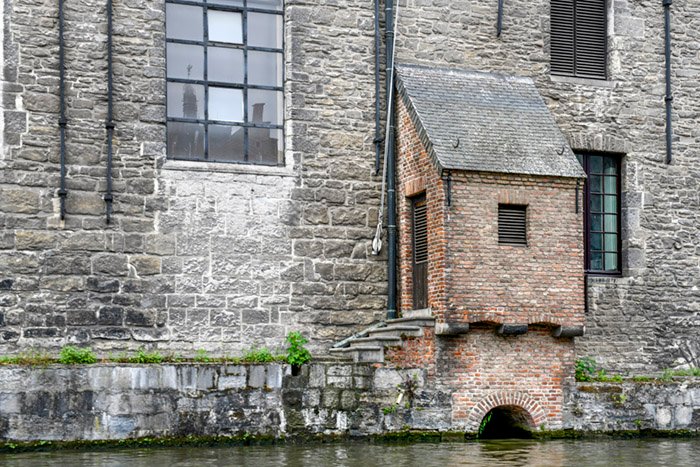
Legend has it that this was the only toilet available to Medieval Monks … talk about line-ups
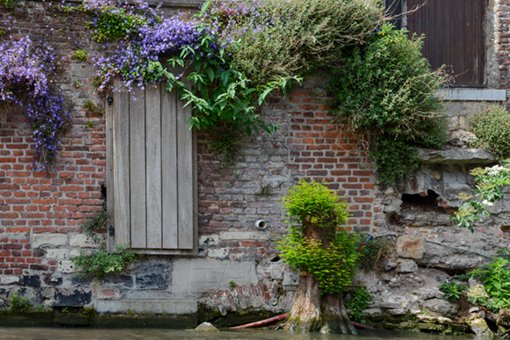
So many interesting River side views on a Canal Ride in Ghent
In the Late Middle Ages Ghent became one of the largest and richest cities of northern Europe, with some 50,000 people in 1300. One of the first sights on our boat cruise this afternoon was past an old monastery (above photo). Notice the bump-out addition to the building? It was an outhouse, and it emptied directly into the river! No flushing needed! Hundreds of monks lined up every morning to use this toilet. The monks were not the only people whose toilet emptied into the river.
The solution that the locals came up with was …to brew beer as an alternative beverage to water. I have heard this tale over and over again through the years and also heard that the children drank beer. Today I learned they brewed a “safer” version for children: Only 2% alcohol.
WALK around GHENT
Architectural Eye Candy …
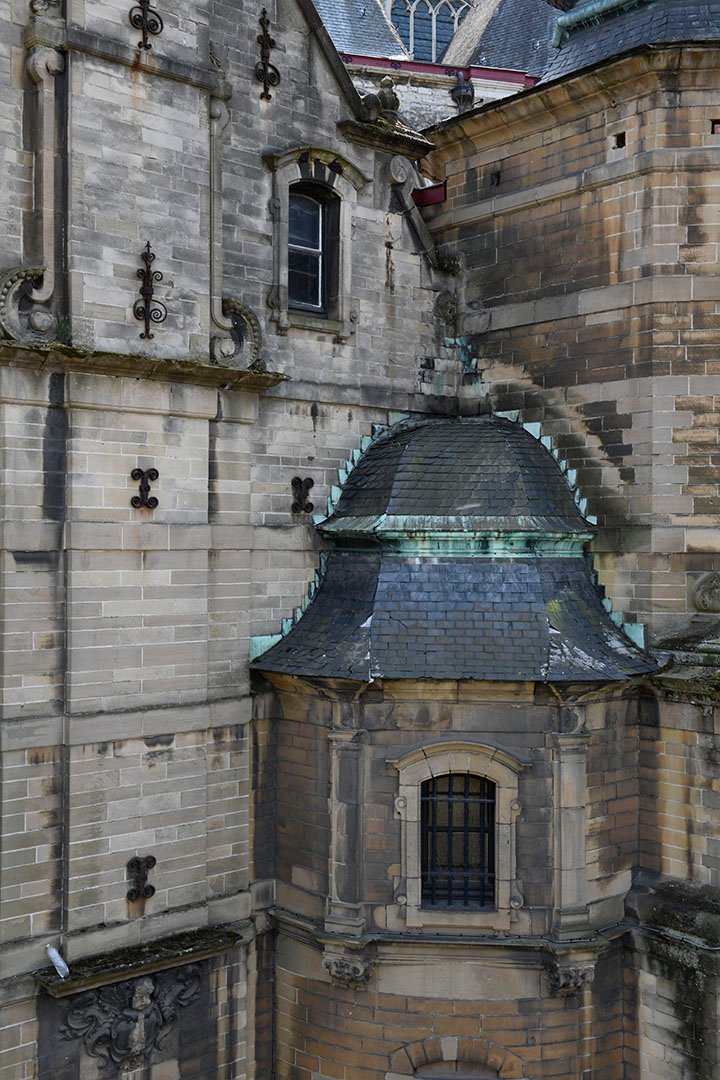
Architectural Eye Candy on one of the Ghent Churches
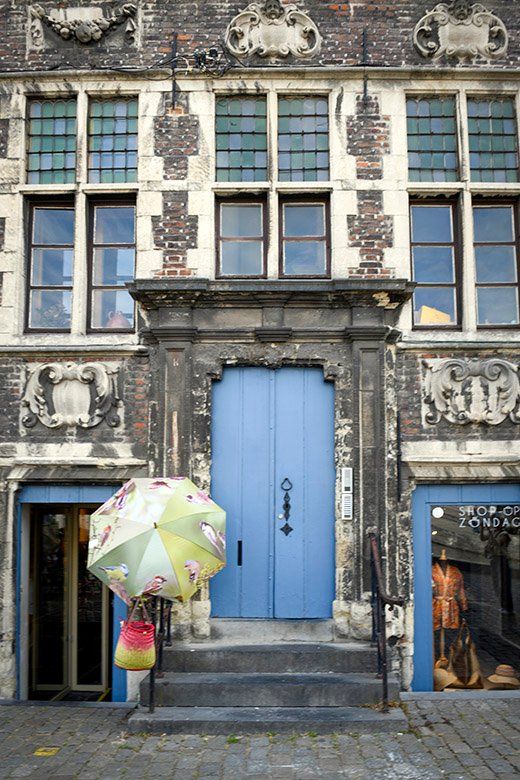
Delightful Ghent Shop with Blue Door
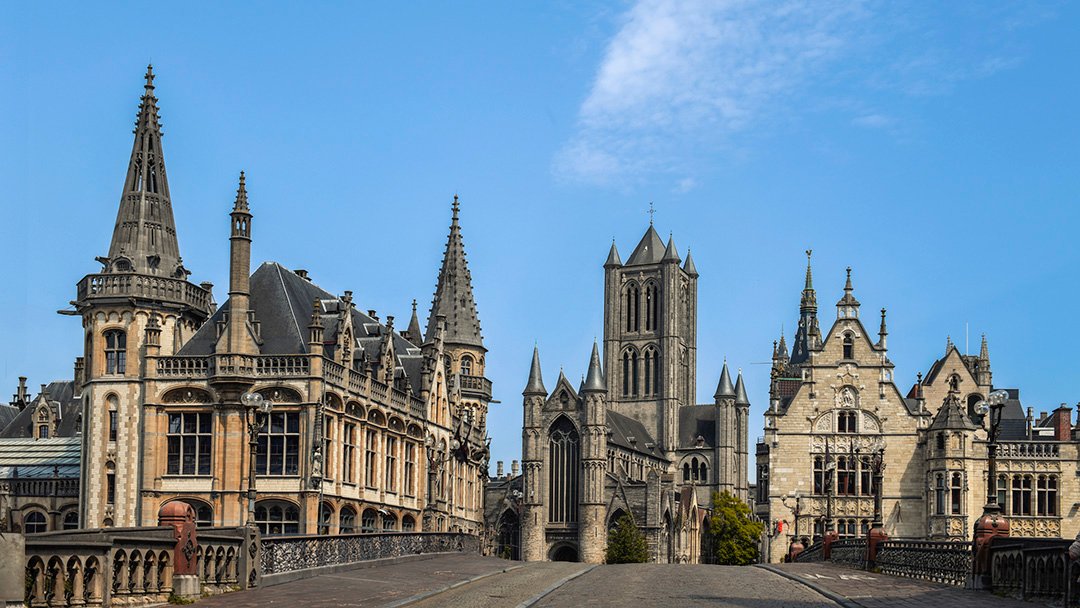
Beautiful Panoramic View from St Michaels Bridge that includes the Ghent Town Hall, the Belfry of Ghent, Saint Nicholas’ Church
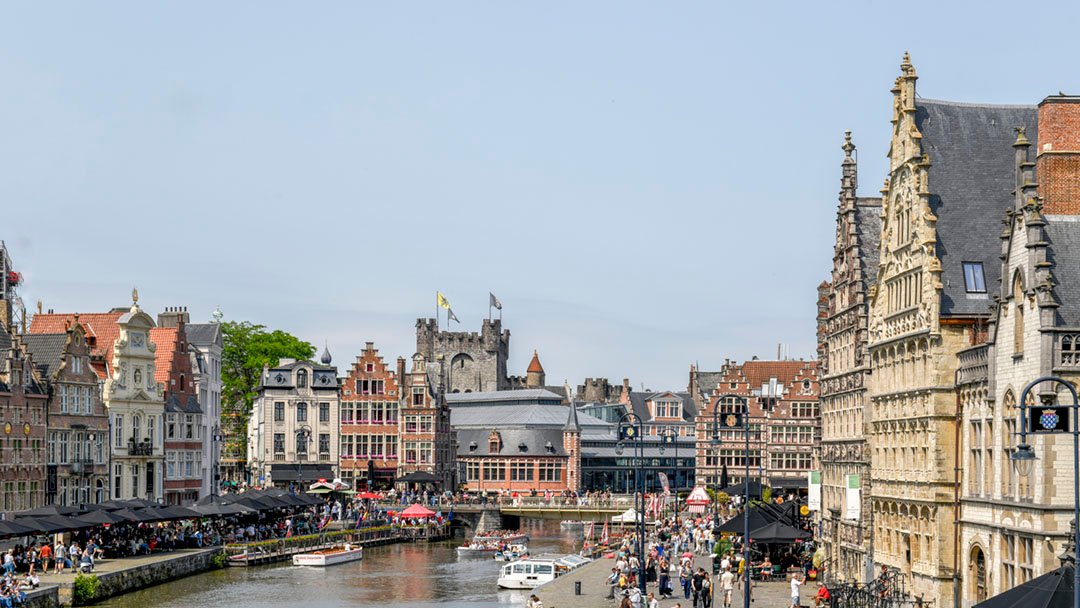
Getting back to the industry in the area the city was the centre for the cloth and wool trade in the Middle Ages. The Lakenhal or Cloth Hall is located next to the city’s Belfry tower was where these products were sold. The Lakeenhalle building was started in 1425 by Philip the Good. The hall took 20 years to complete with only eleven of the 20 bays completed.
A decline in the 15th century occurred due to the 100 Year War, taxes, the impact of the Black Death and competition from other countries. Today the building is a Unesco World Heritage site.
Ghent was eventually granted charters that allowed them certain rights and privileges such as freedom from feudal obligations. Feudal obligations I understand it to mean ‘reciprocal duties between lords and vassals, primarily involving military service, counsel, and financial contributions from the vassal in exchange for a grant of land and protection from the Lord’
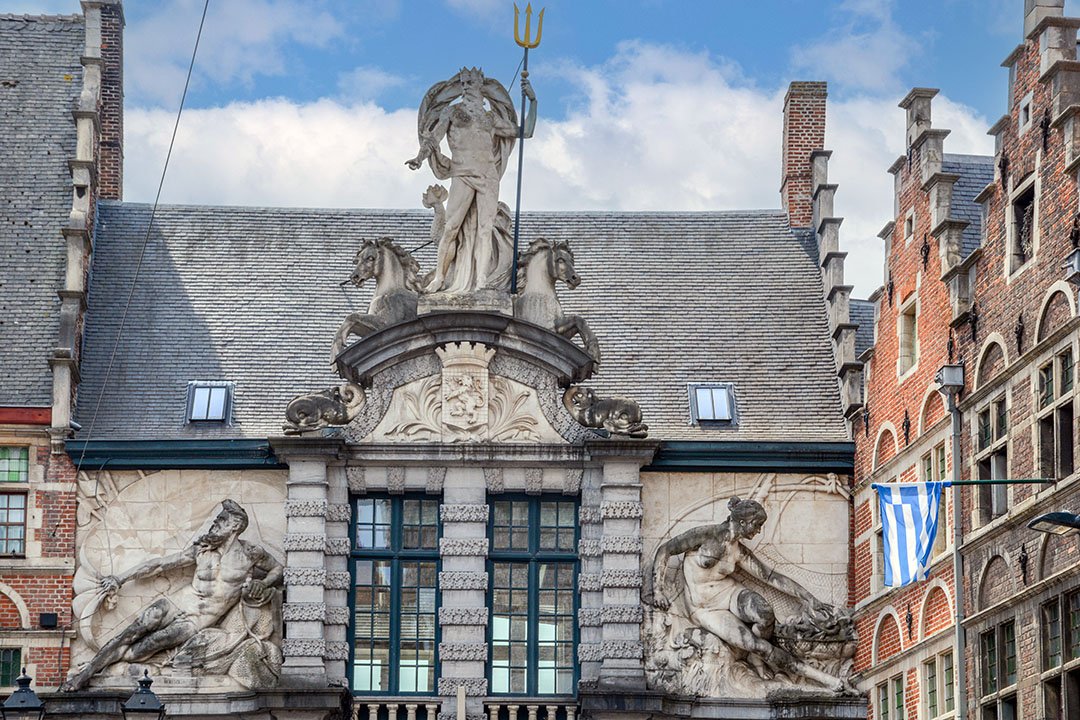
Beautiful Neptune Marble statue in the facade of the old fish market in Ghent
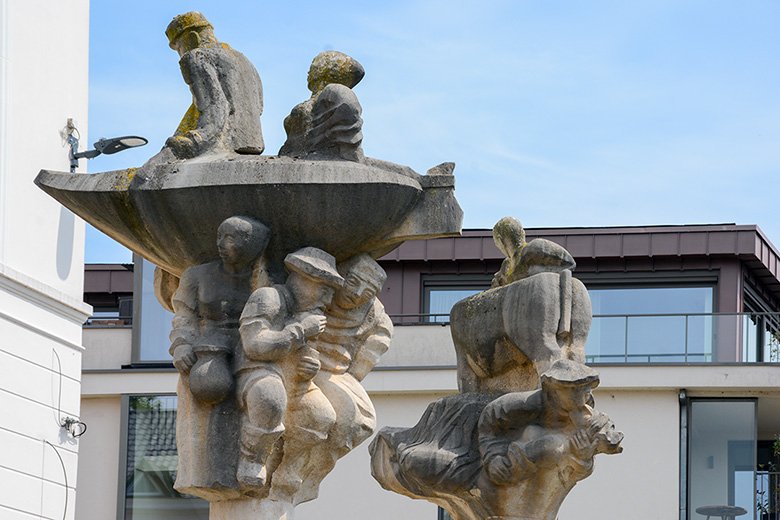
Sculptures on the Bridge of Imperial Pleasures in Ghent
GRAVENSTEEN CASTLE
Castle of the Counts in Ghent
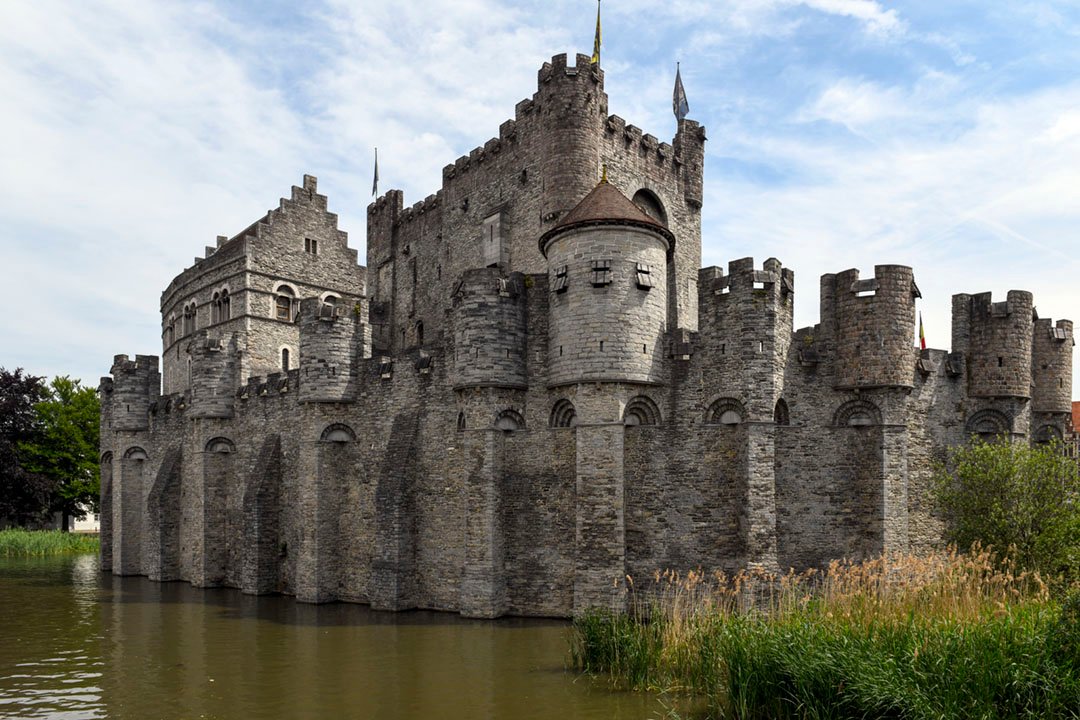
Castle of Counts (Gravensteen) built in 1180 A.D. by Count Philip of Alsce in Ghent
Let’s carry on down the cannel past the Castle of Counts (Gravensteen) built in 1180 A.D. by Count Philip of Alsce in Ghent, a mere 845 years ago , just to keep things in perspective. The castle has some grand rooms and of course a dungeon. A couple of the torture items used was the Spiked Collar that was very effective as few prisoner’s lasts longer than 3 hours. The next device is the Limb Clever – no description needed and several other equally terrifying devices.
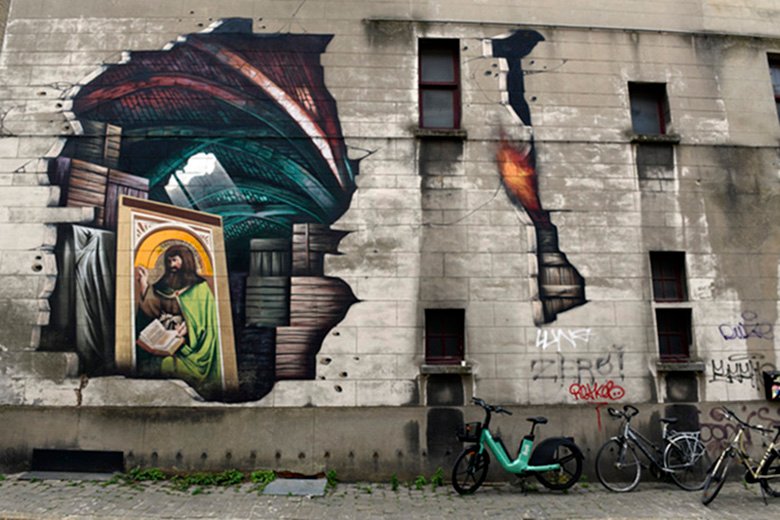
Ghent Street Art
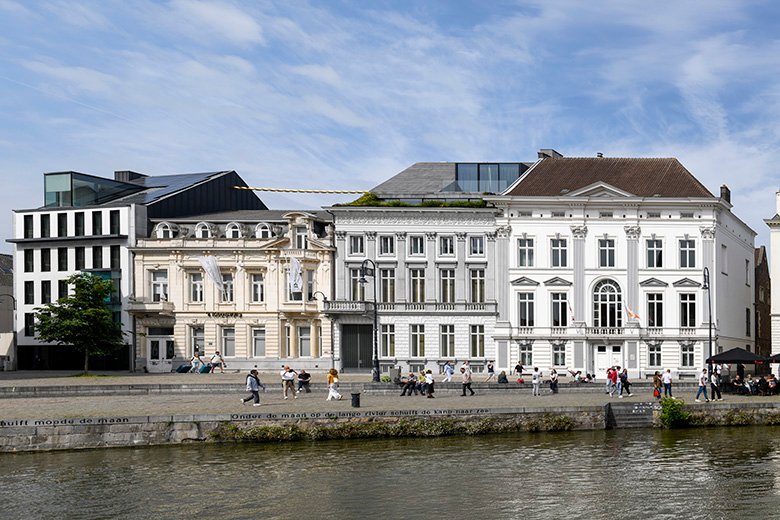
This is a picture of the picturesque Graslei in the historic city center of Ghent along the River Leie.
The city even had lamp lighters who went around every night at dusk to ignite these lamps, generally along the main streets and bridges.
If you are looking for specific architectural styles, you might be interested in the Ghent City Hall, built in both late Gothic and Renaissance styles. The City Hall was built between 1519 and 1618.
There is so much to see and do in Ghent and we would have loved to stay longer to experience the evening, night and early morning. Yet, even as a Day Trip, Ghent was a wonderful and unique experience that we would recommend to anyone travelling in this part of the world!
Walk the City at Night
Definitely walking around Ghent at Night is magical. The shops and streets are lit up and the inner city is so peaceful next to the canals. Our favourite time of day … as well as morning of course!
Car or Public Transportation?
No Point in bringing a car as everything is walkable once you in the town. The medieval town stretches for dozens of blocks in every direction.
Enjoy! To get in and out we relied on Uber.
Bring Cameras
There are so many Photo Opportunities in Ghent and you may never leave your hotel without it. Also Video is amazing while taking a Canal Cruise.
When you look back on your photos you will see so many details you missed.
Chocolate & Beer!
The food is so delicious and we never had a bad meal. The obvious choices are Chocolates, Beer and don’t forget to try the Waffles … they are SO light that strawberries have no calories!

Relax Life is Getting Slower !
Earth’s rotation is changing speed. It’s actually slowing, and this means that, on average, the length of a day increases by around 1.8 seconds per century.




Gallery
St Nicholas Church
St. Nicholas’ Church which was built in Tournai bluestone or Petit Granit . It is a dense limestone and known for if dark blue-gray color.
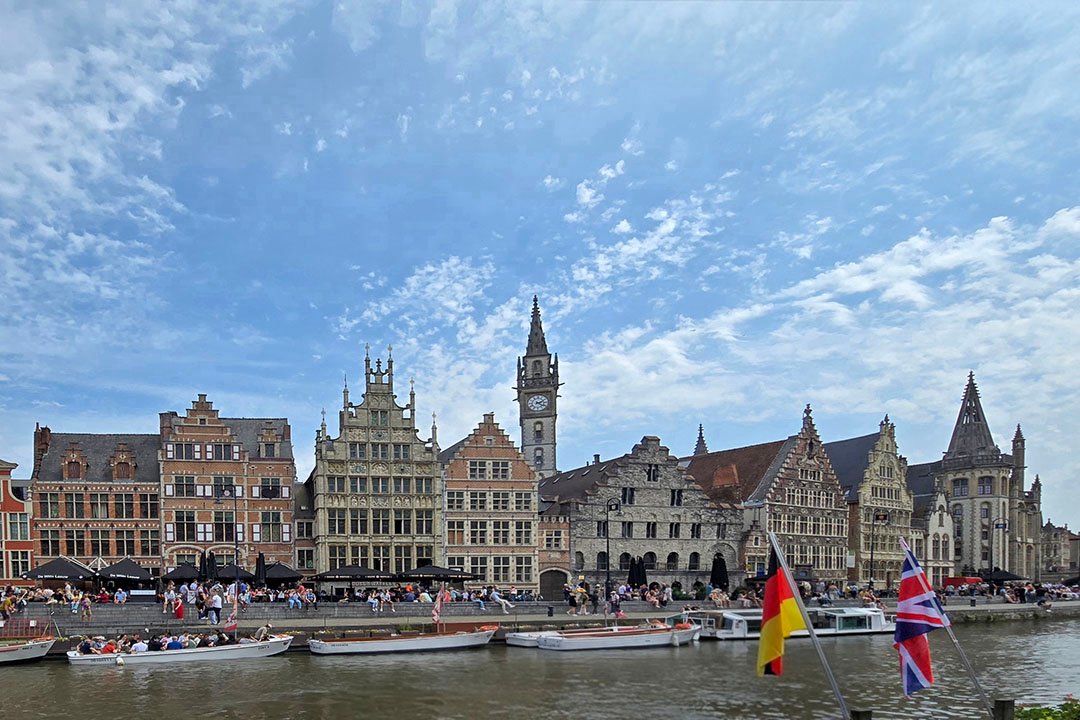
Ghent Canal and Guild Houses
Ghent Canal and Guild Houses
Gravensteen Castle in Ghent
Gravensteen Castle in Ghent built in 1180 AD
The Rabot of Ghent
The Rabot is one of Ghent’s most distinctive medieval landmarks, built in 1489.
Ghent Shop with Blue Door
Ghent Shop with Blue Door
Long View on the Canal in Ghent
Long View on the Canal in Ghent
Beautiful Neptune Marble Statue Ghent
Beautiful Neptune Marble statue in the facade of the old fish market in Ghent
1-Riverside Ghent
So many interesting River side views in Ghent
Monks Medieval Bathroom in Ghent
Legend has it that this is the famous Monks Medieval Bathroom in Ghent
St Michaels Church Ghent
St Michaels Church Ghent
Ghent City of Guilds
At the core of Ghent, the Graslei Canal is lined with tall Guild Houses that highlight the magical beautiful of the Medieval Buildings
Guild Houses located on Graslei in the medieval city center of Ghent, Belgium
House of the Angel and First Corn Meters’ House in the historic center of Ghent along the River Leie
House of the Swans – Ghent, Belgium
This building with 2 Swans on the facade was once a Brothel and later a Brewery. It is now home to the Marriott Hotel.
Ghent Sailing Ship Etching W
Stone relief carving of a medieval sailing ship on the facade of the Ghent Free Boatmen’s Guild House (Gildenhuis van de Vrije Schippers) in Ghent, Belgium.
Saint Bavo’s Cathedral
In the Middle Ages, Ghent flourished into a powerful city, allowing churches to be build larger and more lavishly. Saint John’s Church was converted to the Gothic style during the 15th and 16th centuries, and gradually took on its current form as Saint Bavo’s Cathedral
Sculpture at Emperor Charles V Bridge Ghent
Sculpture at Emperor Charles V Bridge Ghent. The Bridge of Imperial Pleasures
Ghent Bridge Church
Beautiful Ghent Panoramic View including Old Post Office, St Nicholas, Bridge View
Ghent Architectural Eye Candy
Architecture Eye Candy on one of the Churches in Ghent